
In 1966, the Chief Designer of the Soviet space program, Sergei Korolev, died on the table during surgery. But what if he hadn’t? What if he had lived and won the Space Race for the Soviet Union by landing the first man on the Moon in 1969? What would it mean for America, the Cold War, for Communism, for space?
This is the premise of Star City, a new(ish) show on Apple TV. It’s billed as a science fiction, alternate history, spy thriller in the vein of John Le Carré. In theory, I am the bullseye of the target market for this show.
The trouble is that Star City is a Science Fiction show that doesn’t care about science, a spy thriller without competent spy craft, an alternate history that doesn’t care about history. The actual heart of the story is the drinking, affairs, lies, and emotional outbursts. In the final accounting, it is a mediocre period soap opera with prestige production.
But none of that is the real problem. The real problem is that Star City utterly fails to imagine the time and place that it has chosen for its setting.
The show’s message can almost immediately be derived from its aesthetics. Every room is colorless and dark. The average shot is a smear of black-brown. Bright shots really only happen outdoors against washed-out monumental architecture or in the few scenes that take place in the West.
I found myself wondering why everyone’s hair and make-up looked so awful until I realized that they actually made them ugly on purpose. They want them to look like they’ve just been bawling their eyes out and/or woken up from a long, disorienting midday nap.
This visual language carries over to the performances, which I would characterize as dour. That’s not to fault the actors; their characters are written to be uniformly trampled and despairing. No one has the slightest sense of humor, the slightest bit of passion, the smallest iota of hope. In short, nearly every character has the personality of dingy dishwater, and they look like wet Muppets.
The plot itself revolves around the relentless impunity of state violence, and soap opera style melodrama. To the first point, there is:
The impulsive and extra-judicial execution of a prominent cosmonaut by a KGB agent immediately after it becomes clear that she’s innocent. (This takes place in episode one.)
An overt threat to kill/disappear the first Soviet woman on the Moon and replace her with a doppleganger if she doesn’t learn to stick to the script.
A KGB interrogation of a prisoner, which doesn’t work. But then they try torture and that works really well. Torture, it turns out, is the secret to good interrogation.
As for the melodrama:
One cosmonaut’s wife is cheating with another cosmonaut, her husband’s best friend.
The other-man cosmonaut and first woman on the Moon are forced into an arranged marriage. This is sad because they don’t love each other.
But then they realize they love each other! They realize this moments before he leaves for a secret 9-month mission. This is also sad.
Cuckold cosmonaut sabotages a space mission, thereby committing HIGH TREASON, to protect his cheating wife from being blackmailed with… music smuggling.
(Neither of these lists are exhaustive of the grimdark and/or sad-sack moments that appear in the show.)
The show wants us to know that these people are living under intense state oppression. The KGB has their thumb on top of everything anyone does in Star City. Everyone who lives within its walls is perpetually at risk of being tortured or murdered by the state for showing the least bit of noncompliance, and even when they aren’t actively dealing with that threat, their lives are dreary and despairing.
Except: That’s not how it was.
Here’s Asif Siddiqi, professor at Fordham University, the foremost English language historian of the Soviet space program:
We have this impression that life in the Soviet Union was really bad—and it was, under Stalin, back in the ‘30s and ‘40s. There was a lot of paranoia and shadows and people disappearing. But that stuff really stops around the ‘50s and ‘60s. By the ‘60s and ‘70s, it’s actually a moment of optimism for a lot of people because the economy was doing better and they’re going to space.
He describes the actual Star City, known as Zvyozdny Gorodok in Russian, as being “very brightly colored, it’s festive, and it has that Soviet ‘60s and ‘70s architecture, which has lots of hammer-and-sickle imagery.”
Also: “It wasn’t like the KGB had absolute authority, because if you were a big enough cosmonaut, you could push back.”
If you lived in Star City, you were likely a cosmonaut, scientist, engineer, or some other member of the supporting staff. You had better than average living conditions, consumer goods were more available than they were previously, and you were contributing to work that held real promise for the future. Yes, you lived in a facility with an intense security regime, but it wasn’t a vehicle of state oppression.
The late 1960s in the Soviet Union marked a transitional period. The economy was still growing, living standards were still rising, and the stagnation and cynicism that would come to define the 70s hadn’t yet set in. The dominant experience for most people—and doubly so for these people in particular—was stability and modest prosperity.
To portray it is as a period of terror and domination is not a little whoopsie; it is to confuse the 60s with the 30s, Brezhnev’s rule with Stalin’s. Star City portrays an alternate history in which the Soviet Union was somehow both more successful, and yet far worse. Why?
I don’t think this was a case of being lazy about the historical research. The show is sprinkled with factoids about Soviet space history—mentions of Tsiolkovsky and Fyodorov, the tradition of pissing on the bus tire before a launch, the delightful Soviet obsession with Venus. So why did they get so many details right but the tone and period so wrong?
Here are the showrunners in an interview on The Watch podcast:
We were kind of starting to develop the idea and then Putin invaded Ukraine, and we were like, so that kills that project. But we kept talking to Apple and they were like, we actually think this could be more relevant now than ever.
And later:
For All Mankind is focused on the astronauts and the engineers […] To us, […] the intelligence and what was going on behind the scenes was fascinating. It felt like an opportunity to kind of almost dip our toes into a different genre. […] So we definitely backed into that a little bit. Like, this is our chance! Let’s use *For All Mankind* to tell the spy thriller we always wanted to tell.
And also:
The thing that guided us a lot was, in For All Mankind, space is dangerous, and on this show, I feel like what’s more dangerous is getting back from space.
This, to me, tells the whole story. Star City is not really about the Soviet space program in the late 60s, it’s a show about the Russia that would someday be dominated by Putin. It doesn’t care about the scientists or engineers because the showrunners wanted it to be a spy thriller, so it shoehorns in bits of spy plot where there were none. Science, space, and history serve purely aesthetic roles.
So what? I’m upset that there’s a show that wasn’t nice to Soviet Communism? I wanted them to make Soviet propaganda?
Obviously not. But in setting out to tell a particular story about state oppression, Star City fails to imagine the Soviet space program and the people who made it work. It misconstrues their temperaments, the ideas motivating them, and the forces they were struggling with. And this harms our imagination much more than any factual inaccuracy.
The more interesting story is this: In the late 1800s, Russia was a country of mostly serfs with a small nobility. Some sons of noblemen went to Western Europe to study and encountered wild philosophical and political ideas to which their ideological immune systems were naive. Marx’s ideas took root in a place they were quite ill-suited for, which in turn led to a bloody revolution with deeply undesirable outcomes: Lenin and Bolshevism. This is followed by Stalin murdering millions of his own people, and unimaginable losses in WWII, then the Allied victory at great cost, and finally the Cold War. Now this is where things get really interesting.
Communism, thus far, hasn’t borne out, but a group of scientists, engineers, and economists have a dream of making it real. They believe that despite the bloody origins of the Soviet state, it could become a place of bounty and equality. They think that maybe with the right technology, they can make the dream come true. They will make Soviet sports cars and Soviet champagne, and they will lead humanity into space.
By 1969, that optimism has only just begun to dip. And into that moment, Star City inserts a crowning glory: the Soviets beat the Americans to the Moon and win the space race. This is an amazing historical moment, one that already contains a wildly Science Fictional premise, and the show piles on top of that a moment of great consequence. And the show does worse than nothing with it.
The travesty of Star City is that this is an interesting moment in history that the show writes over with a less interesting one, like taping over the Watergate hearings with an inconsequential football game. If you want to tell a story about state oppression, the USSR is absolutely killer subject matter, but the specific place and time of the cosmonaut training center in the late 60s is not it.
By shoehorning Stalin-esque terror and pessimism into the story along with Le Carre-style spy thriller plot conventions, the show gives completely the wrong idea about this moment in time, the people who populated it, the ideas that motivated them, and the structures they worked within, which in turn gives the viewer the completely wrong story about the world.
The show communicates to the reader: Russians are the bad guys. There is something permanently fucked up in their society and no matter what time period you encounter them in, it’s all state oppression. There are no hills and valleys in their history, no real hope for change, there were never any real idealists or patriots.
It’s an utterly simple story, and one that’s actively harmful to the mind that consumes it. If you watch a bit of For All Mankind, you will learn the inverse lesson: Americans are the good guys. They are ambitious, determined, creative, and optimistic. What Star City makes clear is that the writers see these as virtues exclusive to Americans. Surely they will never have to deal with authoritarianism!
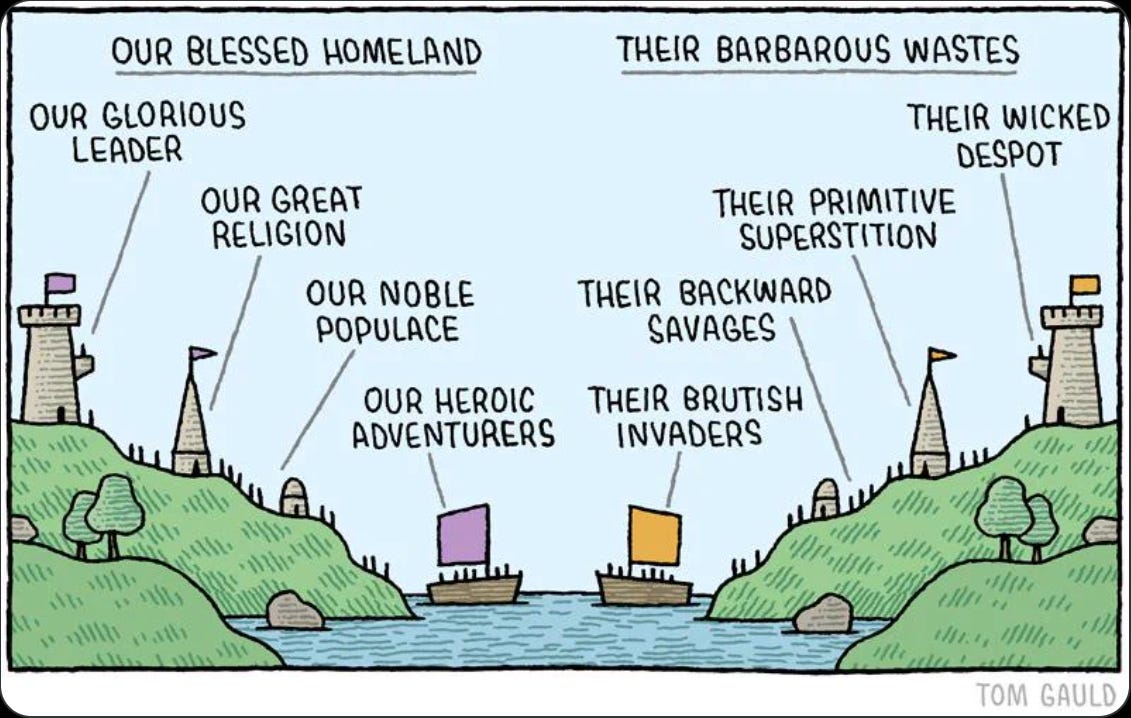
In fact, this show changed how I view For All Mankind. Because FAM doesn’t spend much time or energy on the Soviet half of the story, it’s easy to forget that their history would have been changed too. In retrospect, it becomes clear that they are merely accessories to American history, because nothing meaningfully changes for them.
Winning the space race would not have saved the Soviet Union in the long run. Their problems were too structural to be solved by this one moment. But the show doesn’t even let them have the moment.
I have tried to restrain myself to my core complaint: this alternate history doesn’t get history right, nor does it imagine an alternative to it. But if I may bring out my dead, I have two other major complaints:
For being a science fiction show, it plays fast and loose with physics and engineering. For example, the Soviets calculate that a landing capsule will touch down on the other side of the Finnish border, so they love tap it with a missile to make it land on their side of the border—without blowing it up of course.
For being a spy show, the spycraft is sort of trash. The core mystery is only solved because the investigator (a low-level surveillance clerk who is nonetheless recruited for international missions and light torture) has a weird fascination with the people she surveils, one of whom teaches her daughter in school, and this bit of happenstance just happens to lead her to the mole. The central mystery is solved through about three coincidences.
It’s the worst of both worlds (a thing I’m seeing more and more of lately). The grim tenor of prestige television without the integrity of its writing; the schlock of genre without the energy of its ideas.
The real, actual lesson of the Soviet midcentury is that it is very, very hard to make a better world, and the path is not straight. The lesson of Star City is that state oppression is bad, and unfortunately there’s nothing you can do to stop it. But don’t worry, that sort of thing is just for awful Russians and they have it coming.
One of the recurrent lessons of John Le Carre’s spy fiction—on which Star City draws heavily—is that the West is more like the East than it would like to think. The lesson of Star City is that the opposite is true.
The US/USSR was born of a dream of a better world, a more just world. Wars were fought for this dream, and the state has inflicted atrocities on its own people in its name. The dream has at times gotten closer, then receded, then drawn closer again. There is no telling where it will all end. History is not inevitable; it cannot be derived from the present.
When you laid out the premise for this show, I got really excited about it. I’m so bummed it didn’t live up to what it could have been!