
The Steadfast Utopian is a publication about society and technology, philosophy and politics, Science Fiction and Fantasy. We'll delve into the past, decipher the present, and dream of the future.
Some questions we'll explore:
How is technology interacting with our biology and our culture?
What does it mean to be human in an era of machine ascendancy?
Are we being guided by our dreams or our nightmares?
How has our literature shaped our reality, and what role might it continue to play?
What is the purpose of consciousness in the Universe?
How might Utopian ideas provide a path forward for humanity?
Is there cause for hope?
But before we get to any of that, why “The Steadfast Utopian”?
What is Utopia?
The word "Utopia" — as you probably know — is a bit of a pun. Coined by Sir Thomas More in 1516, it is derived from Greek and can be interpreted to mean both "good place" (eutopia) and "no place" (outopia). More's original rendition is a fictional island nation characterized by social harmony.
Here enters a critic. “It means no-place because it can never exist. It's a farce, a satire. The happy island isn't real." (For now, this critic will go unnamed.)
That's one possible interpretation. Another interpretation is that Utopia is a no-place because it's not here or now. It's somewhere on the horizon, off the edge of the map, in Terra Ignota. Utopia is located someplace we’ve never been, or in the future.
This is a necessary bit of framing as it allows us to think about a better world without conceding to the messy details of the present. It frees our imagination to construct a society piece by piece, holding each fragment up to the light to see how it might succeed or fail.
Our critic is not impressed. “We all know that perfection is impossible, and thus Utopia is impossible.”
But this is another straw-man. Utopia does not mean “perfect place”, only “good place”, and goodness is not unattainable. We can make a society where everyone is clothed and fed, where wrongs are corrected and wounds are healed. We can live in balance with the natural world. We can cooperate without coercion. We can make a world where society and the individual flourish — culturally, spiritually, technologically.
In this conception of Utopia, people will still cry sometimes. Utopia does not demand perfection, only goodness.
Our critic scoffs. "You say it is attainable, but the society you describe is better than any that has ever existed. You tell us what is good about it, but not how it works."
A fair point. Even my more humble definition exceeds the zeniths of human history, but that is exactly what makes it Utopia. There are countless other heavenly afterlives, earthly paradises, and perfect states in the intellectual history of humanity — the Garden of Eden, the Elysian Fields, the Peach Blossom Spring, Avalon, Hyperborea, Atlantis, the Republic, the City of the Sun — but Utopia is short-hand for all of them because it captures the universal aspect: Utopia is the good-no-place.
Utopia is a dream. It isn’t here, it isn’t now, but it may exist tomorrow or just over the next hill. It is a place and time that is good, and we can see it when we close our eyes.
What is a Utopian?
The word “Utopian” suggests something radical: an inhabitant of Utopia. If Utopia is a dream, Utopians are the ones who dream it.
Utopians, as a rule, are fantasists. We imagine different worlds vividly. Even after we close the book, turn off the screen, put down the pen, or refocus our eyes on the room around us, the worlds we imagine persist as a sort of after-image. Herein lies the potency of the Utopian.
When you inhabit other worlds in this way, you see new possibilities for the one you were born into. You don't take it for granted that things must be as they are.
Some of the ideas that Utopians imagine are impractical, some impossible, some even undesirable, but that is precisely the point. We can't prejudge what is practical, possible, or desirable. The work of the idea must precede the work of the change. and it is the Utopians who do that work, it is an almost sacred duty.
Furthermore, Utopians are natural malcontents. I don't necessarily mean that we are troublemakers, but we are easily frustrated by complacency and normalcy. If the world can be better, why isn't it? The Utopian's dreaming is thus not an escape from reality, but the motivator for its improvement.
Utopians inhabit the dream of the good-no-place, and when we open our eyes, the world looks different. New things are possible. The dream of Utopia, like all dreams, changes our waking life.
The Non-Utopians
Our still unnamed critic is growing impatient. "What is this nonsense? What do you actually believe? Where do you stand? What are your economics? Your foreign policy?"
As I have defined it, a Utopian is not an ideologue. I can imagine that there are many ideologies that may have Utopians as adherents, but also non-Utopians. Utopians share an approach, an outlook, and a general destination, but as soon as the dream is made rigid and dogmatic, it ceases to be a dream.
"Then we're all Utopians. Or none of us are. Meaningless."
In order to clarify what a Utopian is, I want to tell you about a few Non-Utopians.
The first is the Realist. The Realist is gnostic about reality: they are certain that they know what is true and what is possible. The Realist may be benevolent and thus an ally to the Utopian, but they cannot see Utopia for themselves. They are not dreamers.
"Ah, that's me," says our critic. "I'm a Realist. I see things as they are"
I disagree. I think our critic is something else: the Pessimist. They often call themselves Realists, but they have mistaken cynicism for clear-sightedness. They are certain that the past, present, and future are all bad, and any progress is illusory or temporary. The Pessimist does not believe in progress.
"Oh, please. You're just trying to discredit me."
Not so. That would be more in the playbook of the third non-Utopian, the Sophist. They are the worst of all. The Sophist is also a kind of Realist in that they are certain of how the world works, and they believe that the laws of reality — psychology, biology, geography, physics — make the ideas of right and wrong, true and false irrelevant. There is only strong and weak, winning and losing. The Sophist doesn’t even believe in goodness.
The Utopian believes that new, good things are possible, and that we do not have to abandon our principles to achieve them.
The Untrustworthy Utopian
Perhaps I could just call this publication “The Utopian”, but I feel that I must answer the charge most often directed at us: that we are naïve.
“That's true," the Pessmist says, “Utopians are unrealistic, impractical, and idealistic. They have grand designs that ignore the constraints of reality and human nature. They are reckless, careless, delusional. They are unreliable and not to be trusted.”
In short, we are dangerous fools.
To that I say: that may be true. Utopians hope to turn the world into a good-place, and that requires more than some tinkering around the edges. The scope of that change may make us impatient, unwise, and insufficiently cautious. And the greater the change, the greater the unknown risks it poses. Utopian schemes have often failed, and often failed disastrously. This is inarguable.
But you know who else suffers from incurable foolishness? Every human being who has ever lived.
We are short-sighted, self-deceptive, and ignorant. We often chase our own annihilation and neglect the basic labor that would set us up for success and happiness.
Every generation has been born into a world it did not choose, that no one chose. Every turn of history has replaced old dogmas with new dogmas, old failings with new failings. Every day has been a battle to overcome our ignorance, our wounds, our petty impulses, our bestial nature.
The only hope we have of any human ever being more than a benighted, dangerous fool is to create a better world. What we did last was wrong and what we do next will probably be wrong too, but perhaps it will be just a little better.
It's true that a better world can't be built with good intentions alone, but without good intentions, it cannot be built at all. We should not abandon the quest for Utopia, but pursue it with increased wisdom.
I accept this criticism of Utopians, but the alternatives are unacceptable.
The Steadfast Utopian
In order to integrate this criticism, we must learn from the Non-Utopians. We must be grounded like the Realist to ensure that we are not engaging in mere escapism. We must entertain (but not embrace) the negativity of the Pessimist to avoid tragic missteps. And we must accept the Sophist's truth that being good is insufficient, and to win our better world we must be strong.
Whereas "Utopian" is a 16th century neologism built in Greek, "steadfast" comes from much older Proto-Germanic: "stede" meaning a place and "fast" meaning firm or established.
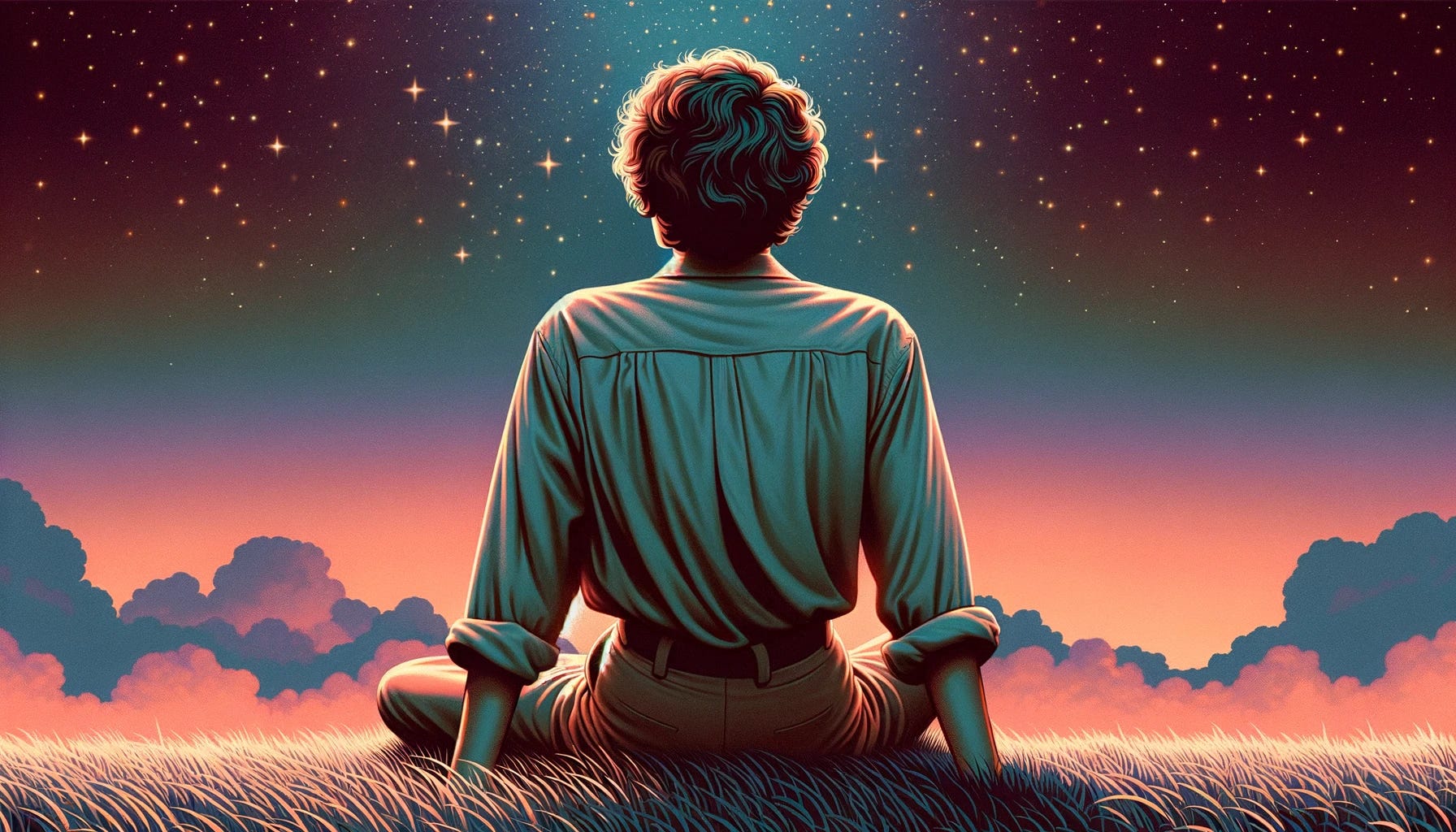
The Steadfast Utopian has their head in the clouds and two feet on the ground.
The Steadfast Utopian knows that their forebears have sometimes been reckless, naive, impatient, “unrealistic”, but they are resolved not to be.
The Steadfast Utopian is modest, self-aware, conscious of their own failings and fallibility.
The Steadfast Utopian is patient and determined. Resolute, unwavering, unyielding.
The Steadfast Utopian does not give into despair, nor do they lose themselves in the dream.
The Steadfast Utopian knows it is a long journey. The path leads through hardship, to the stars.
Welcome to the Steadfast Utopian.
Acknowledgement
I owe the premise and inspiration for this entire publication to Ada Palmer. My thinking on this subject and many others has been greatly shaped by her work. Additionally, I’d like to thank:
Plato
Thomas More
Voltaire
Mary Shelley
Harriet Taylor
John Stuart Mill
Victor Hugo
Frederick Douglass
HG Wells
Aldous Huxley
Ursula K Le Guin
Octavia Butler
Kim Stanley Robinson
We should be friends